Source Wireless Hanging Hook Digital Scale for travel luggage and fishing
Compare 30 Wireless Hanging Hook Digital Scale options from verified suppliers in China. Buyers can evaluate specifications like capacity, accuracy, and material to find the right device for travel, fishing, or industrial weighing needs.
Key considerations
Products List


Digital Hanging Scale Digital Suitcase Scale
$2.30 - $2.40
MOQ: 500 Pieces
Guangdong South China Sea Electronic Measuring Technology Co., Ltd.


0.1g 0.01g Digital Pocket Weight Scales
$2.45 - $2.85
MOQ: 1000 Pieces
Guangdong South China Sea Electronic Measuring Technology Co., Ltd.


Electronic Weighing Scales Digital Crane Scale Wireless Hanging Scale with Hook (EDCS800)
$26.00 - $29.00
MOQ: 500 Pieces


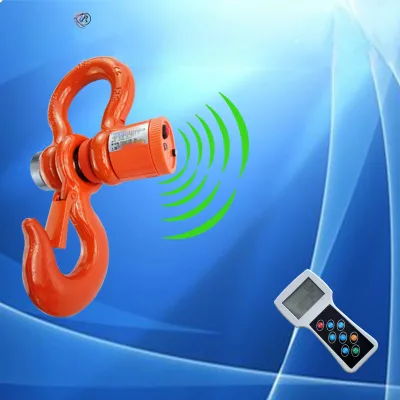

30tons Electronic Hanging Hook Scale Industrial Digital Wireless Crane Weighing Scales
$299.00 - $1000.00
MOQ: 1 Pieces


Comprehensive Sourcing Guide
Strategic Sourcing Guide for Wireless Hanging Hook Digital Scales
Understanding the Technical Architecture of Hanging Hook Scales
When sourcing a Wireless Hanging Hook Digital Scale, buyers must first distinguish between the fundamental mechanical structure and the electronic data transmission capabilities. The core product category is defined by an electronic structure that utilizes a hanging hook working type, designed specifically for suspending loads rather than placing them on a platform. The supplied market data indicates that these devices typically feature an LCD or LED display type, allowing for clear visibility of weight readings in various lighting conditions. The accuracy of these units varies significantly based on the intended application; observed specifications range from high-precision models with 0.01g accuracy suitable for specialized scales to industrial units with 0.1kg accuracy designed for heavy-duty commercial or industrial weighing.
The material composition is a critical technical differentiator. While some models utilize Polypropylene (PP) or general plastic materials to keep the unit lightweight and cost-effective for travel or luggage applications, heavy-duty industrial variants often employ stainless steel construction to withstand harsh environments and resist corrosion. The standard capacity for these hanging scales can vary from light-duty units weighing under 30kg to robust industrial models capable of handling capacities up to 50 tons. The sensor technology also plays a pivotal role; capacitive sensors are noted in the data as a specific type used in these electronic scales, often paired with static type data stabilization treatment to ensure the reading remains steady before being transmitted. The wireless functionality, implied by the core keyword, requires a robust communication protocol to transmit data from the hanging unit to a remote receiver or mobile device, though the specific transmission range and frequency must be verified against the supplier's technical datasheet.
Compliance and Certification Verification Protocols
In the B2B procurement of electronic weighing instruments, compliance is not merely a formality but a prerequisite for market access and liability protection. The observed product data lists several key certifications, including CE, ISO9001, and BSCI. Buyers must treat these as verified attributes of specific listings rather than universal guarantees for all products in the category. The CE marking indicates conformity with health, safety, and environmental protection standards for products sold within the European Economic Area. ISO9001 certification suggests that the manufacturing facility adheres to a quality management system, which is essential for ensuring consistent production quality. BSCI certification focuses on social compliance, ensuring that the supply chain meets ethical labor standards.
When evaluating a potential supplier, procurement teams should request current, valid certificates for each of these standards. It is important to note that the "Made in China" or "Yongkang" and "Guangdong" origins listed in the data do not automatically confer certification status; rather, they indicate the geographic location of the manufacturing hubs. Buyers must verify that the specific batch of wireless hanging hook scales they intend to purchase carries the appropriate certification marks. For industrial applications, additional standards such as OIML (International Organization of Legal Metrology) may be required, though these are not explicitly listed in the provided context. Therefore, the buyer must explicitly ask the supplier if the product meets the legal metrology requirements of the destination country. The absence of a specific certification in the initial product listing should trigger a deeper inquiry rather than an assumption of non-compliance, as some suppliers may offer these certifications upon request or for specific product lines.
Cost Drivers and Pricing Structure Analysis
The pricing of wireless hanging hook digital scales is influenced by a complex matrix of factors, including material costs, electronic complexity, and customization requirements. The observed price range in the market spans from $0.63 to $1,206.31, a variance that reflects the vast difference between a basic plastic luggage scale and a high-capacity industrial stainless steel unit with advanced wireless telemetry. The primary cost driver is the weighing capacity; models with a capacity of 31.5kg or higher often require more robust load cells and reinforced structural components, such as stainless steel, which significantly increases the Bill of Materials (BOM) cost.
Customization is another significant factor. The data confirms that customization is available for these products, which can impact the unit price. Customization may involve modifying the scale color (observed options include Blue, Red, Green, and Orange), altering the scale size (standard dimensions observed include 17x6.5x2cm), or integrating specific branding. The packing method also influences cost; options range from individual color boxes to bulk cartons containing 100 pieces. Suppliers offering "Standard Export Carton" packing for large orders may provide better economies of scale compared to those offering individual retail packaging. Furthermore, the Minimum Order Quantity (MOQ) plays a crucial role in the final landed cost. The observed MOQ range of 1 to 1,000 units suggests that buyers can source small quantities for prototyping but will likely need to commit to larger volumes to achieve the lower end of the price spectrum. Buyers should be aware that the "G.W" (Gross Weight) and "N.W" (Net Weight) of the product, observed as 5.5kg and 5kg respectively for certain models, directly impact shipping costs, which can be a substantial hidden cost driver in international procurement.
Typical Applications and Use Case Segmentation
Wireless hanging hook digital scales serve diverse industries, and understanding the specific application is vital for selecting the correct technical specifications. The data identifies several distinct use cases. For travel and logistics, the "Luggage Scale" and "Travel Scale" functions are paramount. These units are typically compact, made of PP or plastic, and feature a capacity under 30kg with high precision (0.01g) to ensure passengers do not exceed airline baggage limits. The "Fishing Scale" application is another niche market, requiring durability against moisture and salt, often utilizing the same electronic structure but with specific waterproofing considerations.
In the industrial and commercial sectors, the application shifts to heavy-duty weighing. The "Platform Scale" and "Commercial Scale" categories often utilize the hanging hook mechanism for weighing large, suspended loads such as steel coils, machinery parts, or bulk bags. The observed capacity of 800kg and even up to 50 tons indicates that these units are designed for warehouse logistics, shipping containers, and manufacturing processes. The "Special Scales" application mentioned in the data suggests that these devices are also used in specialized environments where standard weighing methods are impractical. The "Room Temperature" operating environment is a standard specification, but buyers must verify if the scale can operate in extreme conditions if intended for outdoor use. The shape of the scale, observed as either polygon or circular, may also dictate its suitability for specific hanging points or storage configurations in a facility.
Supplier Evaluation and Geographic Sourcing Strategy
Evaluating suppliers for wireless hanging hook digital scales requires a focus on geographic clusters known for manufacturing excellence in this sector. The data highlights "Yongkang" and "Guangdong, China" as key production origins. Yongkang is historically renowned for its hardware and tool manufacturing capabilities, often producing durable, cost-effective electronic scales. Guangdong, a major manufacturing hub, offers a broader range of high-tech electronic components and advanced wireless communication modules. When assessing a supplier, buyers should verify their production location against these known clusters to ensure access to a robust supply chain.
The supplier's ability to handle the "Standard Export Carton" and "Color Box" packaging requirements is a strong indicator of their logistical maturity. A supplier that can seamlessly switch between bulk packaging for wholesale and retail-ready color boxes demonstrates flexibility. Additionally, the "Data Stabilization Treatment" being of the "Static Type" suggests a specific manufacturing process that the supplier must be able to replicate consistently. Buyers should request samples to test the wireless connectivity and data transmission stability, as this is a critical failure point in digital scales. The "CE/ISO9001/BSCI" certifications mentioned should be cross-referenced with the supplier's corporate registration to ensure the entity holding the certificate is the actual manufacturer. Avoiding suppliers who cannot provide clear documentation on their "prod_model" (such as BT-205B, L6, CS, EDCS800, WH-A11, OCS-CS-E) is essential, as these model numbers often correspond to specific technical configurations and warranty terms.
Quality Control and Long-Term Procurement Considerations
Implementing a rigorous quality control (QC) protocol is essential for mitigating risks associated with electronic weighing devices. Given the variance in accuracy from 0.01g to 0.1kg, buyers must establish clear acceptance criteria for each order. The "Automatic" measure method observed in the data implies that the scale should self-calibrate or stabilize automatically; QC checks should verify that this process is consistent across all units. Testing for the "Working Type: Hanging Hook" is crucial to ensure the hook mechanism can withstand the rated capacity without deformation or failure. For stainless steel models, corrosion resistance testing should be included in the QC plan.
Long-term procurement considerations extend beyond the initial purchase. Buyers should evaluate the supplier's ability to provide spare parts, such as load cells or display units, which are critical for maintaining the operational lifespan of the scale. The "prod_packing" details, such as "1PC/Color Box, 100PCS," suggest that the supplier has a standardized packaging line, which is beneficial for inventory management. However, buyers must also consider the "Lead Time" and "MOQ" constraints. While the data shows an MOQ as low as 1, long-term contracts often require higher volume commitments to secure better pricing and priority production slots. The "Environment: Room Temperature" specification serves as a baseline, but buyers should inquire about the scale's performance in varying temperatures if the application involves outdoor or unheated warehouses. Finally, ensuring that the wireless transmission remains secure and interference-free over time is a key long-term performance metric that should be monitored through regular field testing.
Comparative Analysis of Product Specifications
To facilitate a clearer decision-making process, the following table summarizes the key technical variations observed in the market for wireless hanging hook digital scales. This comparison highlights the divergence between light-duty and heavy-duty models, aiding buyers in matching product specifications to their specific operational needs.
| Feature Category | Light-Duty / Travel Model | Heavy-Duty / Industrial Model |
|---|---|---|
| Primary Application | Luggage, Travel, Fishing | Commercial, Industrial, Platform |
| Material Composition | PP, Plastic | Stainless Steel |
| Display Type | LCD | LED |
| Accuracy | 0.01g | 0.1kg |
| Weighing Capacity | < 30kg | > 300kg up to 50t |
| Structure | Electronic Scale | Electronic Scale |
| Standard Certification | CE, ISO9001 | CE, ISO9001, BSCI |
| Typical Origin | Yongkang, Guangdong | Guangdong, China |
| Packing | Color Box | Standard Export Carton |
| Sensor Type | Capacitive | Capacitive |
This table underscores that while the fundamental "Electronic Scale" structure remains consistent, the material, accuracy, and capacity define the product's market segment. Buyers must carefully align these specifications with their intended use case to avoid purchasing an under-spec'd unit for industrial tasks or an over-engineered unit for simple travel needs. The "Shape" variation (Polygon vs. Circular) and "Scale Size" (17x6.5x2cm vs. larger industrial dimensions) further refine the selection process, ensuring the physical form factor fits the user's workflow. By adhering to these observed facts and verification protocols, buyers can navigate the complex landscape of wireless hanging hook digital scales with confidence and precision.
FAQs
Can I customize the color of the Wireless Hanging Hook Digital Scale?
Yes, customization is available for these electronic scales. Buyers can select from observed scale colors including Blue, Red, Green, and Orange to match specific branding or operational needs.
What certifications are typically available for these weighing instruments?
Products often carry CE, ISO9001, and BSCI certifications. These marks indicate compliance with European safety standards, quality management systems, and ethical labor practices for the supply chain.
Which materials are used to construct these digital hanging scales?
Materials vary by application, ranging from Polypropylene (PP) and general plastic for lightweight travel units to Stainless Steel for heavy-duty industrial environments. The choice depends on the required durability and capacity.
How is the accuracy defined for different scale models?
Accuracy varies significantly based on the intended use, ranging from 0.01g for specialized scales to 0.1kg for industrial units. Buyers must verify the specific accuracy standard required for their weighing capacity.
What is the typical packaging method for bulk orders?
Packaging options include individual color boxes or bulk cartons containing 100 pieces. Some suppliers offer standard export cartons for large volume shipments to optimize logistics and reduce costs.
Where are these electronic scales primarily manufactured?
Production origins are typically located in Yongkang or Guangdong, China. These regions are known hubs for hardware and electronic manufacturing, offering a robust supply chain for these weighing devices.